(Last Updated: July 23, 2026)
Living in the Inland Empire, Central, or Southern California, your sewer line is up against challenging conditions. During the dry summers and wet winters, our expansive clay soils swell and shrink, and this puts constant pressure on underground pipes. Add in ancient cast iron and clay lines common in older neighborhoods and mature tree roots seeking moisture in pipes, and it’s no surprise that sewer line failures are common.
Replacing a sewer line is a big investment, but there are smart ways to save money and still get good results.
Key Takeaways
- Trenchless methods like pipe bursting and pipe lining can lower digging and repair costs.
- Preparing your yard ahead of time can help reduce landscaping costs after replacement.
- Checking insurance and plan options can help cut your costs.
- Choosing less expensive pipe materials like PVC can save you money overall.
- Getting multiple quotes from reliable contractors helps you find the best deal.
Understanding Sewer Line Replacement Options
Before choosing the right repair method, it helps homeowners to see how the main sewer line repair options and how they differ from each other. We will also talk about the high and low costs of replacing the residential sewer line.
Traditional digging
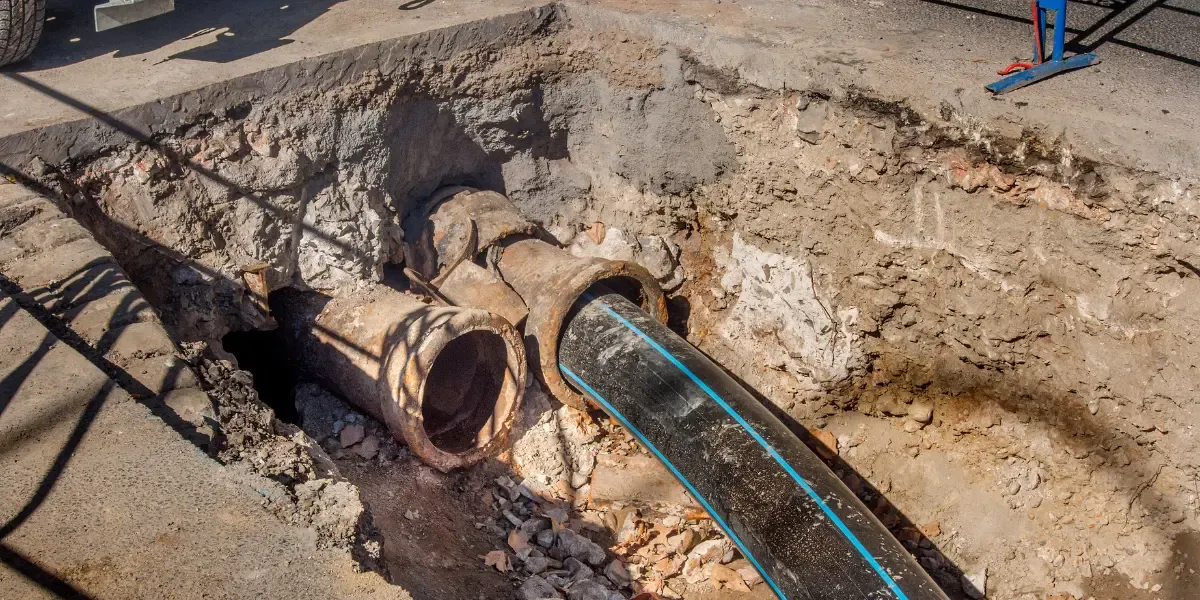
Traditional digging is often cheaper upfront than trenchless methods, but that price tag doesn’t include the cost of restoring landscaping, driveways, or concrete that gets torn up in the process. Traditional digging:
- Is moderately high in cost and home disruption.
- Takes one to three weeks to complete.
- Requires large excavations.
- Is best for severe pipe damage.
Pipe lining
Pipe lining involves inserting a liner into the existing damaged pipe and curing it in place to form a new pipe within the old one. Pipe lining is:
- Expensive, but causes low home disruption.
- Takes one to two days.
- Best for moderate cracks and corrosion in pipes.
Because pipe lining requires only small access points rather than a full trench, it’s a strong fit for CA homes with mature landscaping, concrete driveways, or pool decks.
Pipe bursting
Pipe bursting is used when the existing line has failed and is past the point of repair. A bursting tool is fed through the old pipe while leaving a new one. Pipe bursting is:
- Expensive, but with low home/yard disruption.
- Takes one to two days.
- Best for a full-line failure or pipe replacement.
Patch repair
Patch repair fixes localized leaks and cracks within a pipe without the need for a full pipe replacement. Patch repair is:
- Inexpensive with very low home/yard disruption.
- Takes one day.
- Best for isolated cracks only.
Trenchless Technology (Most Popular for Cost Savings)
Trenchless repair techniques, or replacing sewer pipe without digging with pipe lining and bursting, have become the go-to option for homeowners across the Inland Empire and Central Valley because they minimize excavation needs while still delivering long-lasting fixes.
These trenchless methods reduce the cost of labor and repair work on land. They are a good choice for homeowners who want to save money. Trenchless repair methods are also the best way to replace a sewer line under the house.
Traditional Digging
Traditional excavation is expensive but sometimes the right call, especially when the damage is extensive. If your home sewer line runs beneath a structure and has multiple bends that trenchless technology can’t reach, traditional digging is also needed.
Traditional digging requires PDS Plumbing and Air to pull city permits, dispose of the soil, and restore the area we dug up. On top of labor, these all add up to the high cost of traditional digging.
Before we decide if traditional digging or trenchless methods are needed, we will always inspect the condition of the pipes with a camera inspection of the sewer line.
Pipe Material Types: Cost Breakdown
When looking at pipe replacement, repairs, and lining, there are three different types of piping materials that homeowners can choose from, each with their own pros and cons. They are PVC, cast iron, and copper.
PVC
PVC has become the go-to piping material for the Inland Empire and Southern California.
Pros:
- They’re quite inexpensive compared to other materials.
- They last 50 to 100 years.
- They are resistant to root intrusion, corrosion, and shifting California clay soils.
Cons:
- They are lightweight but brittle.
- They are extremely weak against periods of intense heat, especially when not buried properly.
- They have a low-pressure bearing capacity, meaning they can’t be used for high-pressure lines.
Cast Iron
Cast Iron pipes are an older form of piping that is becoming somewhat obsolete in homes built after 1980.
Pros:
- They are extremely durable.
- They handle heavy soil pressure well.
- They last 75 to 100 years.
Cons:
- They naturally corrode and rust over time.
- They are costly to install.
- They are heavy and can naturally start to sink over time.
Copper
Copper is the most expensive piping material.
Pros:
- They are durable.
- They are highly resistant to corrosion.
- They are highly resistant to heat.
Cons:
- They are expensive to install.
- They are more prone to freezing than PVC.
- They can corrode when highly acidic water flows through them.
Additional Ways to Save Money on Sewer Line Replacement
To guarantee your pipe replacement job is the most cost-effective, follow these guidelines:
- Opt in for trenchless technology when you are able to do so. Methods like pipe bursting and pipe lining allow plumbers to fix or replace pipes with very little digging.
- Prepare your yard in advance by carefully removing and placing grass, plants, and bushes to the side, and mark the spots in your yard where important items are.
- Discuss yard care plans with your contractor to avoid damage.
- Choose cost-effective piping materials like PVC.
- Obtain multiple quotes. Don’t just take the first estimate you receive. Reach out to several contractors to compare prices and look at their suggested ideas.
Many homeowners do not realize that their insurance policies or service companies might help cover costs for fixing or replacing sewer lines.
- Check your homeowner’s insurance policy to see if it covers broken sewer lines or pipe damage.
- Consider getting a plan that includes sewer line issues.
- Contact your insurance or service company to learn about your options.
How to Choose the Right Option for You
Choosing the right piping replacement options and materials can be a difficult thing to navigate for homeowners. PDS Plumbing and Air will give you our honest recommendation, taking into account your time and budget. We offer:
- Expertise in trenchless methods to save time and money.
- The most advanced tools, including a sewer camera inspection to make smart repair choices and replacements.
- Clear Pricing and clear estimates.
- Dependable customer care.
- With locations in Murrieta, CA, Clovis, and Bellflower, our service area coverage includes Inland Empire, Central, and Southern California.
Choose PDS Plumbing and Air for All Sewer Line Replacement Services
If you’ve been looking for the most cost-effective way to tackle your sewer line replacement, you’ve found it with PDS Plumbing and Air. We will help homeowners explore trenchless options and find the best materials for their sanity and their budget. Call us today to schedule a sewer line replacement consultation.
Frequently Asked Questions
What is the cheapest way to replace a sewer line?
The least expensive options often use trenchless technologies such as pipe lining and pipe bursting. These methods help reduce both labor and landscaping costs.
How does a sewer camera help with replacements?
A sewer camera lets you see the inside of the pipe clearly. This helps workers find issues and recommend the best and cheapest repairs.
Is PVC better than cast iron for sewer pipes?
PVC pipes are usually less expensive, lighter, and less likely to rust than cast iron. Because of this, many homeowners like them when they want to save money.
Can insurance cover sewer line replacement?
Some homeowner plans may pay for fixing or replacing sewer lines. You should ask your provider for more details.
What is the difference between pipe bursting and pipe lining?
Pipe bursting means breaking the old pipe while putting in a new one at the same time. Pipe lining uses a liner with resin on it to create a new inner pipe inside the old one.