(Last updated: August 27, 2026)
California homeowners know the struggle of summer power surges and grid fluctuations, but electrical problems and tripped breakers can sometimes come from your air conditioning system. If your air conditioner keeps tripping the breaker, learn the common causes, what you can do, and when to call an HVAC technician at PDS Plumbing and Air.
Air Conditioning Tripping Breaker Key Takeaways
- An AC tripping the breaker is usually due to common problems like restricted airflow, damaged wires, or worn components.
- Homeowners can try several DIY strategies to troubleshoot their air conditioning.
- Burning odors, buzzing, failed AC starts, and other signs indicate that your AC needs professional attention.
Common Reasons Your Central Air Keeps Tripping the Breaker
Several common reasons can cause your central air to keep tripping the breaker. The circuit breaker is a safety device that automatically cuts off electricity from the electrical panel to prevent equipment damage, electrical fires, and shocks.
While California’s electrical grid or other external power supply problems may sometimes cause the breaker connected to your unit’s circuit to trip, an AC repeatedly tripping the breaker is more frequently due to faulty performance and components.
Dirty air filters and restricted airflow
Dirty air filters and restricted airflow force the AC’s blower motor to overcompensate and work harder to pull air through the blockage. Your AC and its circuit are designed for specific amperages, and when the motor continues to strain, it may overdraw electrical current, exceed the circuit’s capacity, and trip the breaker.
Restricted airflow, whether due to clogged air filters or problems with ductwork and vents, can also contribute to secondary issues that further increase the risk of tripping the breaker.
Loose or damaged wiring
Loose or damaged wiring to your AC can trip the breaker in several ways. Constant mechanical vibration, moisture exposure, pests, and other factors can create frayed wires, degraded wire insulation, and similar hazards throughout your AC system.
This damage weakens the connection and increases electrical resistance and heat, while live exposed wiring may touch other metals or conductors to cause a short circuit or ground fault.
A failing or weak capacitor
Failing or weak capacitors are a common reason behind tripped breakers and general AC breakdowns. Capacitors supply powerful voltage boosts to start and run the AC, and they may become faulty due to excessive strain and wear. A faulty capacitor causes AC hard starts or motor stalling, causing the motor to overdraw from the circuit beyond the safe limit.
Compressor strain or age-related wear
Internal compressor strain and age-related wear can trip the breaker in a few ways. Dirty condenser coils can trap heat in the unit and cause thermal overload and amperage spikes, and mechanical wear from improper sizing and similar problems can force motors to overwork and draw excessive current.
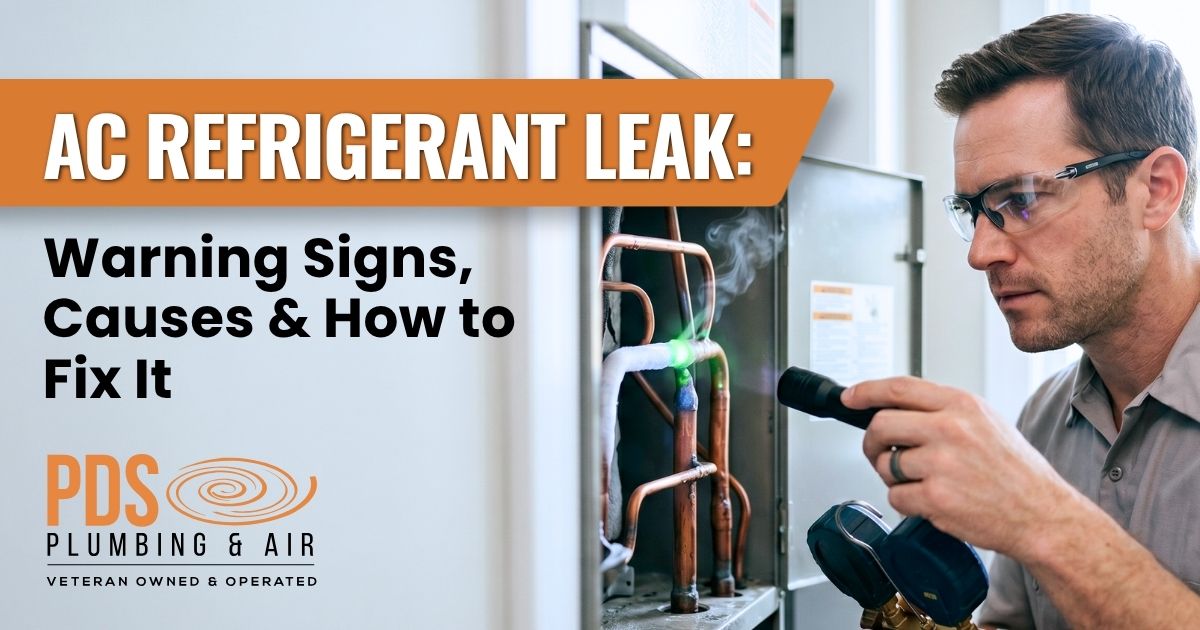
Low refrigerant levels
Air conditioning systems require exact refrigerant levels to absorb and release heat efficiently. Leaks or low charges reduce cooling capacity and force the compressor to run continuously and overheat, which increases electrical resistance and trips the breaker.
Low refrigerant also strains the entire AC system with continuous cycles, accelerating mechanical wear and creating other secondary issues that likewise increases the risk of breaker trips.
Frozen evaporator coil
When your AC has a frozen evaporator coil, refrigerant is unable to efficiently absorb heat from the air as it passes through. This creates issues that mimic low refrigerant, such as an overheating compressor, burnt out motors, and tripped breakers. Frozen evaporator coils may result from several underlying issues, such as restricted airflow, refrigerant leaks, or dirt buildup on the coil surface.
What to Do When Your AC Keeps Tripping the Breaker
When your AC keeps tripping the breaker, try these DIY checks and maintenance tips:
- Reset the breaker: If the breaker trips once, reset it at the electrical panel. Flip the switch to the off position, then switch it back on.
- Replace the air filter: Inspect the air filter, usually found behind the largest return grille. If the filter appears discolored or caked with dirt, replace it with a compatible filter — make sure the airflow arrows on the filter point toward in the same direction as the airflow in that duct.
- Inspect vents: Confirm that your air vents are open and unobstructed.
- Clear debris: Clean the outdoor AC unit and remove any dirt, leaves, and other debris to create enough clearance and airflow.
- Check the thermostat settings: Check that the thermostat is set to cool and at a lower temperature.
Is It Safe to Keep Resetting the Breaker?
It isn’t safe to keep resetting the breaker if your AC causes repeated trips. Here’s why:
- Fire hazard: Short circuits or overloads may cause the wiring to overheat and ignite nearby materials.
- Arc faults: Exposed wires can create dangerous electrical arcs, which carry major risk of significant injuries and explosions.
- Damage to your AC: Surges and short circuits can damage electrical components, such as the control board, capacitors, or compressor motor, and result in costly repairs or premature system replacements.
- Breaker damage: Repeated high-current trips degrade the breaker, making it unreliable in case of a later electrical emergency.
Warning Signs to Call an HVAC Technician for AC Repair
Knowing the warning signs and when to call an HVAC technician for AC repair prevent the problem from escalating into major hazards or fixes. Call PDS Plumbing and AIr if your AC troubleshooting doesn’t resolve the issue and you experience these warning signs:
- Burning odors from your vents, electrical panel, or the AC unit.
- Loud buzzing, clicking, humming, or other unusual sounds from the AC equipment.
- Panels or breakers that are hot to the touch.
- Uneven cooling.
- AC struggles or fails to start.
- Short cycling or prolonged cycles.
- Frozen evaporator coils.
- Weak or warm air from vents.
- Unresponsive or faulty thermostat.
- High energy bills.
How PDS Plumbing and Air Diagnoses a Repeatedly Tripping AC
PDS Plumbing and Air diagnoses a repeatedly tripping AC accurately and efficiently, providing lasting solutions that restore your system’s cooling performance. When your system breaks down during a Central Valley heat wave or isn’t performing as it should, our same-day air conditioning services can get it back on track quickly. We serve homes throughout Central and Southern California, from Clovis and Murrieta to Anaheim and Carson.
We thoroughly inspect the system to identify the underlying problem, then go over the recommended options and provide a free estimate before proceeding with AC repairs. Once complete, we verify your AC’s performance and recommend preventative maintenance strategies to reduce the risk of future breakdowns and prolong your system’s lifespan.
Contact PDS Plumbing & Air Today
At PDS Plumbing and Air, our HVAC team is ready to address tripped AC breakers and other problems common throughout homes in California. We’re a veteran-owned company with a commitment to fast response times and customer satisfaction, and we’re proud to bring more than 30 years of HVAC experience to homeowners in our communities. Contact us today to schedule AC inspections and repairs.